
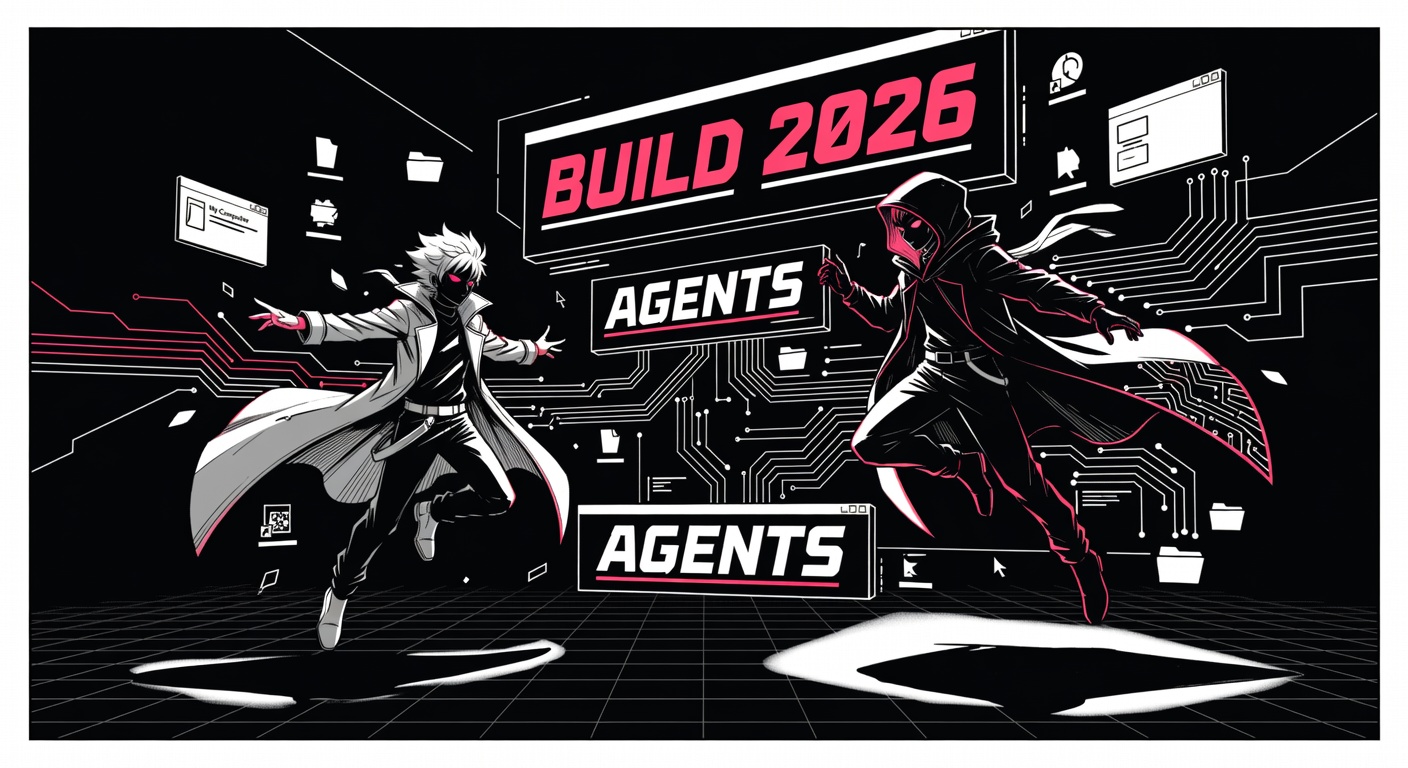
Microsoft Build 2026 kicks off in just a few hours, and the pre-event signals are already pointing in one clear direction: agentic AI is the main character this year.
From what I’ve seen in the lead-up, Microsoft is positioning Windows not just as an operating system that runs apps, but as the actual runtime and orchestration layer for AI agents. This is a notable shift from previous years’ Copilot-focused messaging. The vision seems to be agents that can discover, coordinate, and act across your desktop, enterprise tools, and Azure — all while staying model-agnostic.
What I’m Most Interested In
- How far multi-agent orchestration has matured in GitHub Copilot and Azure AI Foundry, especially for “computer-using” agents that interact with existing Windows applications.
- On-device inference improvements and the role of Microsoft’s own MAI models versus external ones (including the newly mentioned Claude support).
- Practical production details: observability, cost management, and security when running agents at scale on user devices.
- Any updates that bridge the gap between low-code tools like Copilot Studio and more advanced pro-code agent frameworks.
As someone who spends most of my time between Power Platform, Copilot Studio, and Azure AI work, I’m particularly curious how these platform-level changes will affect the way we design and deploy agents in real enterprise environments.
Why This Year Feels Different
Previous Builds have been heavy on demos. This one seems to be addressing the harder, less glamorous problems: reliability, cost at scale, and giving agents meaningful access to the full Windows ecosystem without creating new security headaches.
The collaboration signals with NVIDIA and talk of “unmetered intelligence” across devices suggest Microsoft is betting that the next leap in productivity will come from agents that can actually use the computer the way people do today.
How I’m Planning to Follow Along
I’ll be watching the Satya Nadella keynote (livestream) and tracking the technical sessions on multi-agent systems, Windows AI runtime, and real-world agent deployments. The #MSBuild and #Build2026 hashtags usually surface the most interesting takes from people actually building this stuff.
Recordings normally appear quickly on Microsoft Learn and YouTube, so even if you can’t watch live it’s worth circling back.