
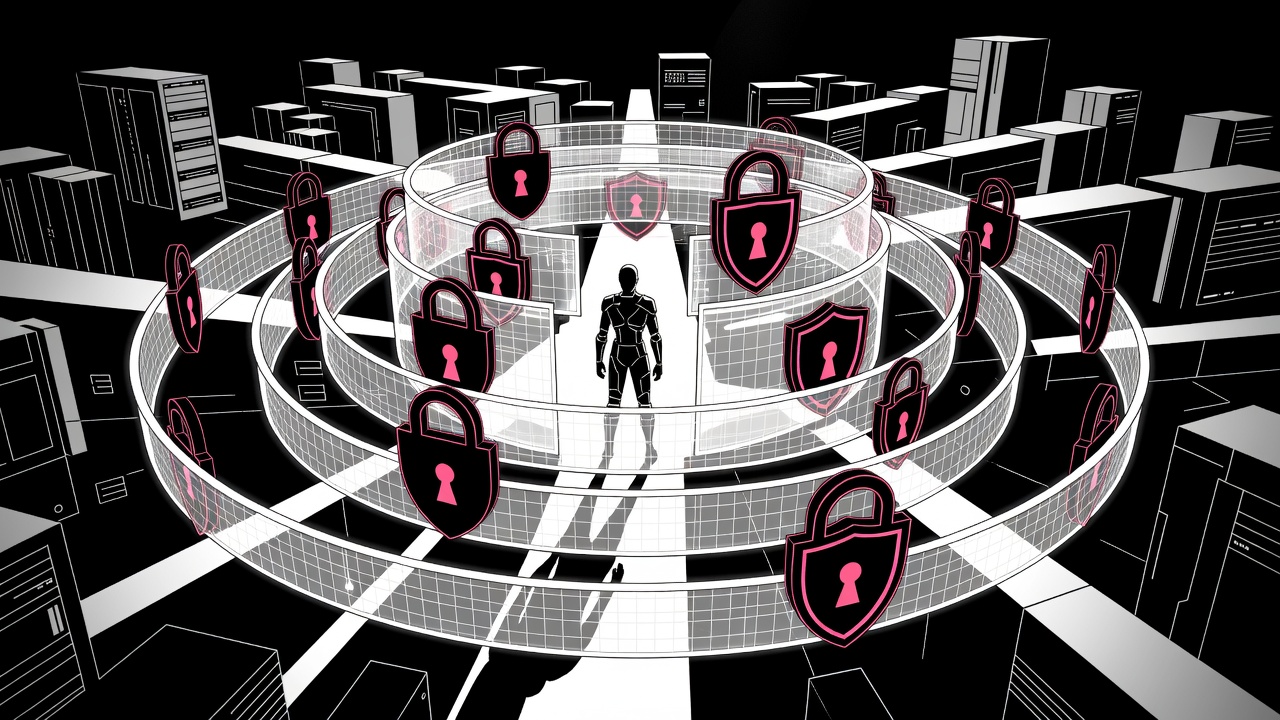
The agent hype cycle has peaked. What remains are the hard problems: how do you run autonomous systems in production without leaking keys, burning budgets, or handing attackers a ready-made attack surface?
Hermes Agent just shipped a concrete answer.
The Real Risk in Agent Sandboxes
Most agent frameworks still follow the same dangerous pattern. You spin up a Docker container or isolated environment, hand the model your API keys, and hope the agent only does what you asked.
A recent study shared on X found hundreds of publicly exposed agent skills with embedded credentials. Once a sandbox is compromised — or even just logged — those keys are gone.
The community has been calling for better isolation. Hermes delivered it with the new credential firewall, built around a tool called iron-proxy.
How Iron-Proxy Actually Works
The mechanism is elegant in its simplicity:
- Real API keys never enter the agent sandbox.
- The agent receives stand-in tokens instead.
- A local proxy running outside the sandbox intercepts calls and swaps the real credentials only at the network boundary.
- If the sandbox is breached, the tokens are useless.
It’s optional, Docker-focused for now, and invoked with a single command: hermes egress setup. The docs live at hermes-agent.nousresearch.com.
This isn’t security theater. It’s layered defense that acknowledges agents will eventually do unexpected things.
The best security doesn’t trust the agent. It limits what the agent can ever access.
Why This Matters More Than Model Size
In the current X conversation, people are excited about bigger models and self-improving research agents. But the production engineers are talking about something else: durable execution, cost guardrails, and now credential isolation.
The distinction between “agentic workflows” and true autonomous agents keeps coming up. Most real deployments today are carefully designed workflows with verification loops, not fully open-ended agents. The firewall makes even the more ambitious setups safer to run unattended.
It also aligns with the broader shift toward agent virtualization and proper infrastructure — giving agents their own isolated Linux instances rather than shared environments.
What This Enables
With real credential protection in place, teams can:
- Run long-lived research agents that actually complete and deliver reports
- Deploy agents in shared environments (Telegram groups, team inboxes) without constant key rotation
- Experiment with more aggressive autonomy knowing the blast radius is contained
The feature arrived at exactly the right moment. As more people move from prototypes to production agent teams, the question stops being “can it work?” and starts being “can it survive contact with reality?”
The Path Forward
Hermes continues to focus on the unglamorous but necessary parts of agent infrastructure: memory management, reliable handoffs, webhook durability, and now credential safety. These are the details that separate demos from systems that actually run while you sleep.
The credential firewall isn’t the final word in agent security. But it is a clear signal that the field is maturing. The tools are starting to match the ambition.
If you’re running agents in production today, this is the kind of update worth testing immediately. The risk surface just got meaningfully smaller.